Category: news

  • BASR Annual Conference 2017

    BASR Annual Conference 2017

    Theme: Narratives of religion

    Conference dates: 4-6 September 2017

    Keynote (Tuesday 5th September)
    ‘Narratives of Pagan Religion’
    Professor Ronald Hutton

    Call for Papers 

    ‘Narrative’ has emerged as valuable category of analysis in the study of religions. This conference takes narrative as its theme with a view to testing its efficacy and resilience for elucidating constructions of religion.

    The BASR invites colleagues to the University of Chester to contribute papers or panels on the above theme. Papers will be 20 minutes with 10 minutes for questions/discussion. Panels will be 90 minute sessions, to normally include 3 papers. Abstracts for roundtables, poster presentations, and alternative formats are also encouraged – please contact the below email for details. Ideas for papers and panels may include, but are not limited to:

    • Competing narratives
    • Orality and textualisation
    • Ritual and archetypal narratives
    • Representation and reproduction
    • Story, story-telling and communities of story-telling
    • Life-writing, spiritual biography, self-narratives, auto-ethnography
    • Narrative identity
    • Narratives of race, class, age, gender, sexuality, (dis)ability, culture, subculture
    • Narratives of religion in fiction, film, media
    • Narratives at the intersection of religion and science (CAM, ayurveda, alchemy etc.)
    • Apocalyptic narratives
    • Official versus popular or subversive narratives
    • Narrative methods and methodologies in the study of religions
    • Curating narratives
    • Narratives of religion in education
    • Grand-, hidden- and meta- narratives
    • Constructing narratives of religion in history, archaeology and other fields

    Abstracts (200 words plus paper title, author name and institutional affiliation in Microsoft Word format) should be submitted to basrconference2017@gmail.com before 30th May 2017. Panels should be submitted in the same way, with details for each paper along with the panel title and the name of the convener/chair.

    If you are an PGT/Taught Masters or early PGR student and wish to present your project for 5-10 minutes there will be a ‘Lightning Talks’ seminar. Please send a proposal of 50 words including a label: ‘Lightning talk’ along with your institutional affiliation, programme, mode of study and year.

    Deadline for paper/panel submissions: 30th May 2017

    Notification of acceptance of papers/panels: No later than 15th June 2017

    Online registration for conference open from: 1st June 2017

    Deadline for registration: 31st July 2017

    A limited number of student bursaries will be made available to support PG students and EC academics to attend the conference. Please see the separate Call for Bursary Applications, which will appear here on the BASR website and mailing list.

    Further updates and announcements, including registration details, will appear here and across social media in due course. For any general enquiries, please contact the Conference Organisers Drs Wendy Dossett, Dawn Llewellyn, Alana Vincent & Steve Knowles on basrconference2017@gmail.com.

    #BASR2017 

    @TheBASR

    @TRSChester

    Chester and clock

  • BASR Annual Conference 2016

    BASR Annual Conference 2016

    British Association for the Study of Religions Annual Conference

    Theme: ‘Religion Beyond the Textbook’
    Keynote Speaker: Prof. Martin Stringer (Swansea University)

    University of Wolverhampton, 5-7 September 2016
    #BASR2016

    People enact, perform and live religion in a multitude of specific contexts, which are studied through a wide range of methods and approaches; and yet mainstream discourse on religion – public, media and textbook – too often reverts to generic, out-dated essentialisms concerning the lives of religious actors and the classification of ‘religion’ itself. However, new methodological approaches are emerging which ensure diverse forms of religion – often contradictory and complicated, offering counter-narratives to the textbook accounts – are understood, which allow different voices to be heard, texts to be re-read, phenomena to be re-interpreted and identity boundaries to be challenged.

    The deadline for paper/panel submissions for the conference has now passed, and registration has closed.

    **Final version of the Programme and Delegate Information, updated 4/9/2016 with last minute amendments** (PDF)

    For any general enquiries, please contact the Conference Organisers, Dr. Stephen E. Gregg & Dr. Opinderjit Takhar on basrconference@gmail.com.

    Information for publishers

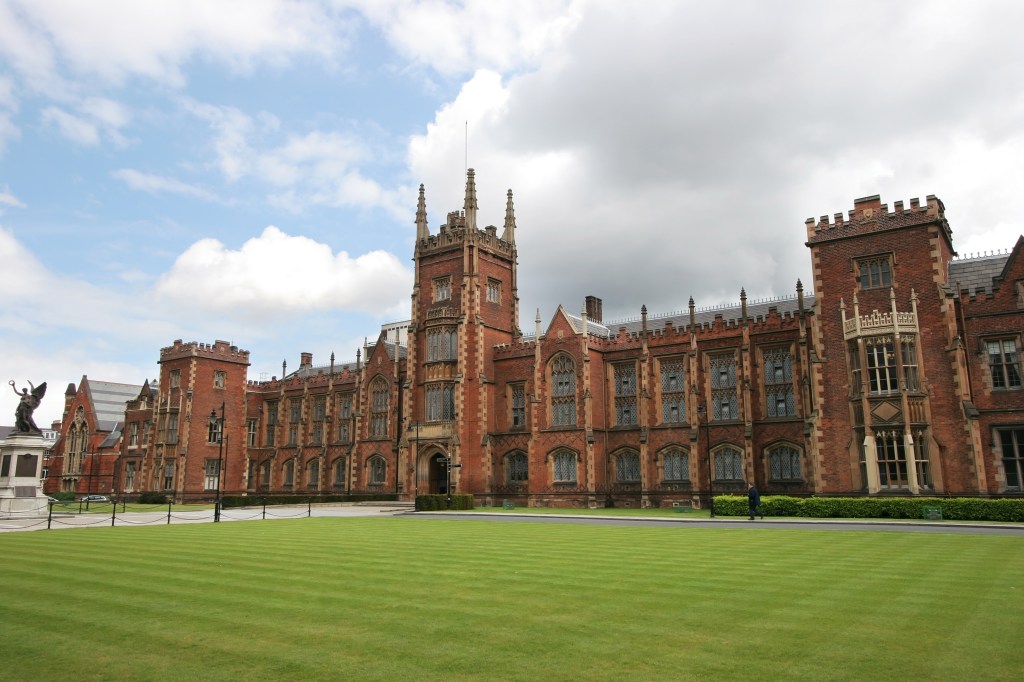
    As ever, BASR welcomes our publishing partners to contribute to our annual conference. This year we will be hosted by the University of Wolverhampton and will be situated in the picturesque nineteenth century part of campus. Please complete and return the BASR 2016 Publishers Booking Form to reserve your place. The form includes options for booking, including full stands, and leaflets in the conference registration pack. Please note that whilst simple tables and chairs can be provided, publishers will need to bring display stands or other specialist presentation equipment. A safe and lockable room will be provided for overnight storage on conference days. If you wish your representative to register for the conference (which includes meals and simple campus accommodation), we will waive the cost of your stand.

  • BASR Teaching and Learning Wiki: Innovative Pedagogy and Legacy Resources

    By Dominic Corrywright, Oxford Brookes University

    This is an invitation to visit and contribute to the new wiki developed for the Teaching and Learning section of the BASR website.

    What’s a wiki? Neither a wookie nor a bear (see Four Lions, Chris Morris, 2010 – a prescient and a splendid resource for teaching courses on terrorism, fanaticism and representations of Islam and the West). That’s to say, it is not a usual web site, especially as are commonly designed for professional associations, where the model is for passive receivers. Wikis are collaborative, and promote active engagement. But they are not a sandbox for all players on the web –there is some editorial oversight, in their initial schemata, objectives and continuing editorial selection and deletion.

    ‘A wiki (wɪki/wik-ee) is a website which allows collaborative modification of its content and structure directly from the web browser’. A Wiki, according to Ward Cunningham, inventor of the first wiki software:

    ‘… promotes meaningful topic associations between different pages by making page link creation almost intuitively easy and showing whether an intended target page exists or not.

    A wiki is not a carefully crafted site for casual visitors. Instead, it seeks to involve the visitor in an ongoing process of creation and collaboration that constantly changes the Web site landscape.’

    The wiki has initially been designed with four distinct areas:

    This invitation is for colleagues to add material, links or ideas for both innovative and legacy approaches and resources for teaching and learning in the study of religions. Indeed it is informative to see in such resources as this Wiki, how the new becomes legacy, becomes new again. An example of this process occurred in the selection of useful legacy resources for the Wiki from the now defunct, though erstwhile innovative, publication Discourse. This journal was established by Higher Education Academy subject centre, Philosophy and Religious Studies Learning and Teaching Support Network in 2001 under the networks’ name and became Discourse from 2003 until its closure (due to the end of government funding) in 2011. In the first edition a report on a workshop for teaching South Asian religions identifies a preliminary question ‘How serious a problem is the ‘world religions’ paradigm?’ (Jackie Suthren Hirst, Mary Searle-Chatterjee, Eleanor Nesbitt ‘Report on a Workshop on Teaching South Asian Religious Traditions, Centre for Applied South Asian Studies’ (PRS-LTSN Journal Vol 1, No. 1, Summer 2001, p. 77). The paradigm of world religions resonates loudly in current discussions about the terminology and curricula of religious studies. Thus the hermeneutics of religious studies has questioned concepts, terms and methods reflexively and repeatedly throughout its brief academic history.

    I have filing cabinets and box files of teaching resources, seminar ingenuities, assessment tools, and curricula that are no longer current, or of much use (though some parts are multi-valent and segue neatly into new modules). Equally, I have a whole undergraduate course for distance learners on Moodle which is soon to be archived as the course has closed. ‘All that is solid melts into air’ and we are left grasping fading legacies while reaching for new forms to coalesce. Just as the intellectual capital of research is stored and accessed in hard and electronic reusable objects (vide: Alison Le Cornu and Angie Pears ‘Reusable Electronic Learning Objects for Theology and Religious Studies’ Vol. 6, No. 2, Spring 2007, pp. 143 – 158) so the resources of pedagogy in specific subject areas need locations for re-use and reconsideration. The Wiki can be a home for such resources, as they are deemed valid and of utility to the wider academic network.

    New currencies of pedagogy equally have a place in the new Wiki. Globally, academic institutions have a growing interest in higher education pedagogy. In the UK context a new Teaching Excellence Framework will promote further research and evidence of academic engagement with pedagogical theory and practice (see consultation). The wiki will be both a resource and an outlet for Religious Studies colleagues.

    Scholars are like magpies, scanning for bright objects with which they populate papers or add interesting/ amusing/ illustrative vignettes to classroom discourse. Wikis welcome such approaches to their content.

    Teaching and Learning section

  • Religious Diversity and Cultural Change in Scotland: Modern Perspectives

    Tue, 19 Apr 2016 at 09:45 – Edinburgh. Free, but needs to be booked: https://www.eventbrite.co.uk/e/religious-diversity-and-cultural-change-in-scotland-modern-perspectives-tickets-21344042606?aff=es2

    A one day conference organised by the Scottish Religious Cultures Network with support by the Royal Society of Edinburgh, School of Divinity (University of Edinburgh), Centre for Theology and Public Issues, Edinburgh.

    10411807_10101524487192851_4343511123839103480_n

    Programme:

    9.45-10.00: Introduction: Dr Leah Robinson and Dr Steven Sutcliffe

    10-10.45 Keynote

    Professor Callum Brown (Glasgow): ‘The Humanist Condition: How the West was Re-moralised for Atheism’

    10.45-11 Coffee

    11-12.30 Panel One: Expressions of Popular and New Religion

    Dr Leah Robinson (Edinburgh): ‘God on our Side? Theological Understandings of Scottish Soldiers at War’

    Dr Steven Sutcliffe (Edinburgh): ‘ “I think he is a Tolstoyan”: Dugald Semple, Food Reform and Conscientious Objection in World War I and after’

    Dr George Chryssides (York St John): ‘A New Religion in an Old Country: How Scotland shaped the Jehovah’s Witnesses’

    12.30-1.30 Lunch (bring your own)

    1.30-3 Panel Two: Cultural Change and Established Traditions

    Dr Marion Bowman (Open University):‘“Walking Back to Happiness?” Renegotiating Protestant Pilgrimage’

    Dr Khadijah Elshayyal (Edinburgh): ‘Muslims in Scotland: new findings from the 2011 Census’

    Dr Hannah Holtschneider (Edinburgh): ‘Interpreting Jewish migration to Scotland’

    3-3.15: Tea

    3.15-4.45: Panel Three: New Discourses

    Christopher Cotter (Lancaster): ‘Discourse, (Non-)Religion, and Locality: Religion-Related Discourses in Edinburgh’s Southside’

    Krittika Bhattacharjee (Edinburgh): ‘The everyday life of a visitor spot: the place of the ‘special’ on the island of Iona’

    Liam Sutherland (Edinburgh): ‘ “One Nation, Many Faiths”: Banal Nationalism, Religious Pluralism and Public Space in Scottish Interfaith Literature’

    4.45/5 closing comments

    Dr Scott Spurlock (Glasgow/SRCN)

  • Conference Programme Published

    Conference Programme Published

    The final programme is now available for the BASR 2015 Conference at the University of Kent. It can be accessed on the conference website at http://blogs.kent.ac.uk/basr-conference/

    There are approximately 70 accepted papers. Please check out the programme and register using this form.
    Inner
    In addition to the academic programme, the conference will include a celebration of the 50th anniversary of study of religion at the University of Kent. We also have the AGM of the BASR as well as the AGM of TRS UK (former AUDTRS) – many reasons to join us! At the AGM of the BASR we will welcome the incoming President (Steven Sutcliffe) and say farewell to the outgoing president (Graham Harvey) as well as secretary (Bettina Schmidt).
  • Conference Poster Released

    Conference Poster Released

    The poster for this year’s annual conference at the University of Kent has just been released. Copies are being sent to all UK TRS departments, so we hope to see these popping up everywhere! If you don’t receive one a printable pdf version can be downloaded here.

    Inner

  • 2015 Conference Announced

    The BASR 2015 Annual Conference, Religion in the Local and Global: Interdisciplinary Perspectives and Challenges, will take place at the University of Kent from the 7th-9th September 2015. It will also include a special launch and reception for 50 Years of the Study of Religion at Kent.

    See our dedicated conference page for more information.

  • Introducing the Authors’ Licensing & Collecting Society

    Introducing the Authors’ Licensing & Collecting Society

    alcs_3

    Calling all academics!

    If you have written material for a journal, or a book, we may be holding monies due to you.

    None of us can afford to be complacent about money, especially during a recession. In addition to your day job, if you have had an article published in a printed academic or trade journal or written or contributed to a book then the Authors’ Licensing and Collecting Society (ALCS) could be holding money owed to you.

    Why would we be holding money owed to you?

    If books, magazines and journals containing your work are available to be photocopied or scanned in schools, universities, businesses or public sector bodies then you may be entitled to a share of the income collected. These organisations buy a licence enabling them to do limited amounts of photocopying. ALCS ensures that from this licence fee writers are paid their dues.

    But I am not a writer….

    For the majority of our 85,000 Members, writing is not their main job. Many of our Members are doctors, nurses, teachers, lawyers, academics etc. They might have written for a journal or have contributed to a book. These people might not consider themselves as writers but have written to share learning and best practice, or even just to supplement their income.

    Academic writers, fiction, non-fiction, translators, adaptors, scriptwriters, magazine and journal article writers, editors and children’s writers are all eligible to be ALCS Members.

    What do I need to do if I want to join and claim my money?

    Join 85,000 other Members of ALCS. Lifetime membership costs £25. This is deducted from your first royalty payment so that no-one is out of pocket and you don’t pay anything up front. You won’t pay anything at all if we don’t collect any money for you.

    In order to claim your secondary royalties you will need to register your published works or specialist academic journal and magazine articles. You can apply to join on-line at www.alcs.co.uk or alternatively contact our Membership Services Department on 020 72645700 or drop us an email at membership@alcs.co.uk.

    Who is the Authors’ Licensing & Collecting Society?

    ALCS is a not-for-profit membership organisation. We represent the interests of all writers and safeguard their intellectual property rights. We collect secondary royalties on behalf of over 85,000 writers across the UK and abroad and pay them directly to our Members, twice a year.

    For more information, check out our website at www.alcs.co.uk, call our Membership Services Department 020 7264 5700 or write to us at: ALCS, The Writers’ House, 13 Haydon Street, London EC3N 1DB.

  • 2014 Conference Programme now available

    2014 Conference Programme now available

    The final programme and book of abstracts for the 2014 BASR conference are now available on the website. This is shaping up to be a very stimulating conference indeed. Follow this link for full details of the conference.

  • Conference 2014 – Deadline now extended to July 16th!

    Conference 2014 – Deadline now extended to July 16th!

    The mini-site for the BASR 2014 annual conference is now live!
    The conference runs from 3-5 Sept 2014 at The Open University, Milton Keynes, UK, and two themes: “religion, art and performance” and “the cutting edge”. Panels and papers are invited. Deadline now extended to July 16th!

  • Welcome to the new BASR website

    Welcome to the new BASR website

    Welcome to the new website for the British Association for the Study of Religion. Guaranteed future-proof.

    The menu above takes you to links – our parent organisations, the EASR and IAHR, and when relevant, the tagboard for our current conference. Here you can view a page which collects everything being said about the conference across social media without having to “dive in” fully.

    On the left, you’ll find everything you would have found on the old site, but improved. You can now read all the bulletins right in your browser, or on your tablet.

    In the column on the right is the latest activity from the Religious Studies Project, podcasts and articles making cutting-edge theory and research accessible to academics, students and the interested public, sponsored by the BASR.

    Please comment below if you find any bugs crawling around…